
Picture walking along a quiet Maldivian beach after dark and watching the shallow water light up in electric blue with every step you take. That is bioluminescence, and it is one of the most memorable natural experiences on a Maldives holiday. The glow comes from microscopic marine life that lights up when the water moves. With its warm, calm seas and many beaches that stay dark at night, the Maldives is one of the most accessible places in the world to witness it. This guide from Make Plans explains when to go, where to look and how to improve your chances, so you can plan your trip around it.
What Causes Bioluminescence in the Maldives?
The glow comes from phytoplankton, tiny drifting organisms known as dinoflagellates. When something disturbs them, such as a breaking wave or a footstep in the shallows, they release a brief flash of blue light. It is a natural reaction, and it is harmless to people.
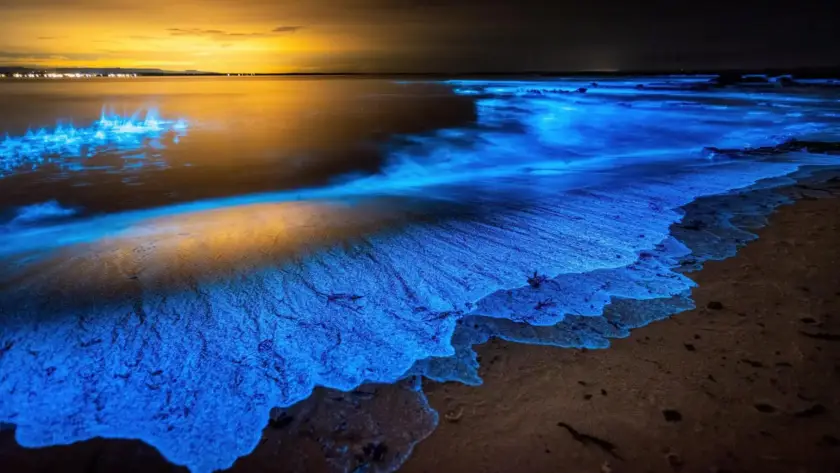
A single organism is far too small to see. The effect becomes visible when millions of them gather close to the shore. That is why glowing waves in the Maldives appear as a soft blue shimmer along the water’s edge, and why the sea seems to light up around your feet as you wade through it at night.
You do not need any scientific knowledge to enjoy it. Three things matter for a traveller: darkness, movement in the water and a little luck. The sections below explain how to improve each one.
When Is the Best Time to See Bioluminescence in the Maldives?
There is no fixed schedule, but three factors improve your chances of seeing a glowing beach in the Maldives.
- Season: Sightings are most commonly reported between June and October, although the glow has been seen in other months too.
- Moon phase: New moon nights offer the best visibility, because there is no moonlight competing with the glow.
- Time of night: Aim to be on the beach after 10pm, when ambient light is at its lowest.
Please note that bioluminescence is a natural phenomenon and cannot be guaranteed on any specific night. Use the timing above to improve your odds, not as a promise. For a wider look at weather and seasons, read our guide to the best time to visit the Maldives.
Where to See Bioluminescence in the Maldives
A few islands come up again and again when travellers talk about glowing beaches.
Vaadhoo Island, Raa Atoll. This is the most photographed and most widely referenced bioluminescent beach in the Maldives. Pictures of its shoreline glowing blue at night have made it the first name many travellers hear when they search for a Maldives bioluminescent beach.
Mudhdhoo Island (Landaa Giraavaru), Baa Atoll. Another well-known spot, and a useful alternative if you are planning a stay in Baa Atoll.
Beyond these two, many resort beaches across the Maldives report sightings, particularly those with direct ocean beach access and minimal artificial lighting. A beach that faces open water and stays dark after sunset gives the plankton the best setting to put on a show.
If this experience is high on your list, it helps to look at resorts in Raa Atoll and Baa Atoll, which are well placed for sightings. For general trip planning, our Maldives vacation guide is a good place to start.

Tips for the Best Experience
- Go after 10pm. This is when ambient light is lowest and the glow is easiest to see.
- Switch off phone torches and resort lighting. Darkness is essential. Give your eyes a few minutes to adjust before you judge the view.
- Plan around the new moon. This phase gives the clearest visibility.
- Choose your villa with care. Beach villas and water villas with direct beach access are better positioned than those facing the lagoon only.
- Wade into the shallows. Movement in the water intensifies the glow, so walk slowly or let the small waves wash over your feet.
- Keep expectations flexible. Do not expect a guaranteed display. Treat it as a bonus experience on top of an already beautiful holiday.
What to Expect on a Bioluminescence Night
It helps to arrive with the right picture in mind. Bioluminescence in the Maldives is a soft, cool blue light rather than a bright show. It tends to appear where the water is disturbed, so you may see a glowing line along the edge of each small wave, or tiny sparks swirling around your ankles as you walk through the shallows.
Your eyes need time to adjust. Give yourself at least ten to twenty minutes on a dark stretch of beach, away from villa lights and pathway lamps, before you decide whether the water is glowing. Many travellers walk straight past a faint display simply because their eyes are still used to the light of the restaurant.
Intensity can vary from one night to the next, and even from one part of the same beach to another. Some nights show a gentle shimmer, while others bring a stronger glow. That variation is part of what makes a good sighting feel special.
A word on safety: the water is safe to wade in, but it is still the sea at night. Stay in the shallows, avoid going out alone in the dark, and follow the guidance of your resort team about beach access after sunset. If you are unsure which stretch of beach is best, simply ask at reception earlier in the day.
How to Photograph Glowing Waves
Many travellers want to take a picture of the glow, and it is worth setting expectations here. The light is faint, so a standard phone snapshot often captures very little. A few simple steps improve your results.
- Use a steady surface. A small tripod, or your phone resting on a rolled towel, helps a lot with longer exposures.
- Choose a long exposure. Many phones have a night mode, and cameras can hold the shutter open for several seconds so the faint blue light has time to register.
- Skip the flash and the torch. Any bright light will wash out the glow and affect everyone else on the beach.
- Create movement. The light appears when the water is disturbed, so have a friend step into the shallows or let a wave roll in during the exposure.
- Be present as well. The glow is often more impressive to the eye than to a lens, so put the device down for a while and simply enjoy it.
If you do not capture a perfect image, that is perfectly normal. The memory of blue water around your feet is the real souvenir.
Which Resorts Give You the Best Chance?
No resort can promise a glowing beach on a given night, so the smart approach is to improve your odds rather than chase a guarantee. Two things matter most: how close the resort is to known hotspots, and the type of beach access your villa offers.
Resorts in Raa Atoll and Baa Atoll are close to the best-known locations. Within any resort, a beach villa with direct access to the shoreline lets you step straight into the shallows, which is where the glow is strongest. A lagoon-facing or overwater villa may still offer a view, but the experience is usually less immersive.
Our team at Make Plans can advise on resort selection based on atoll location and villa type, and can match your travel dates to the season and moon phase. Explore our Maldives packages to see how a stay could be built around this experience. For pricing, please enquire with us.

How to Plan Your Stay Around the Glow
Because bioluminescence cannot be scheduled, the aim is to stack the odds in your favour without letting it dominate your holiday. A simple sequence works well.
- Pick your season. Start with June to October, the months with the most reported sightings, while remembering that the glow can occur at other times of year.
- Check the moon calendar. Look up the new moon dates for your travel month in any calendar or moon phase app, and try to include those nights in your stay.
- Choose your atoll. Raa Atoll and Baa Atoll are close to the best-known locations, which makes them a sensible starting point.
- Select the right villa. A beach villa with direct access to the shoreline gives you the easiest route into the shallows.
- Allow several nights. A longer stay gives you more evenings to try, since the glow does not appear every night.
- Keep the rest of the trip flexible. If the water stays dark one evening, there will be other nights, and plenty to enjoy in the meantime.
Our team can help you work through each of these steps. Because the best time for bioluminescence is not always the best time for sunshine, it is also worth reading our guide to the best time to visit the Maldives so you understand the trade-offs before you choose your dates.
Pair the Glow With Other Maldives Experiences
One of the pleasures of planning around bioluminescence is that the rest of your day is free for everything else the islands offer. Many travellers combine a night on the glowing beach with snorkelling over the house reef, a sunset cruise, a slow spa afternoon or a day out on the water.
If you enjoy the idea of natural wonders, our article on sandbank tours in the Maldives is a good companion read, and our Your Maldives Your Way page shows how a holiday can be shaped around romance, family time, adventure or wellness.
Bioluminescence also suits many kinds of traveller. Couples find it deeply romantic, families enjoy the sense of wonder it brings children, and solo travellers often describe a quiet evening in the shallows as the calmest moment of the trip. Whichever group you belong to, the experience costs nothing extra once you are on the beach. All it asks of you is patience, darkness and a willingness to wade in.
Plan Your Glowing Beach Holiday
A night of glowing waves can be the highlight of a Maldives trip, and the right choice of atoll and villa type makes it more likely. Get in touch with Make Plans and our team will help you find a resort based on atoll location and beach access type. Browse our Maldives packages for ideas, or contact us to start planning.